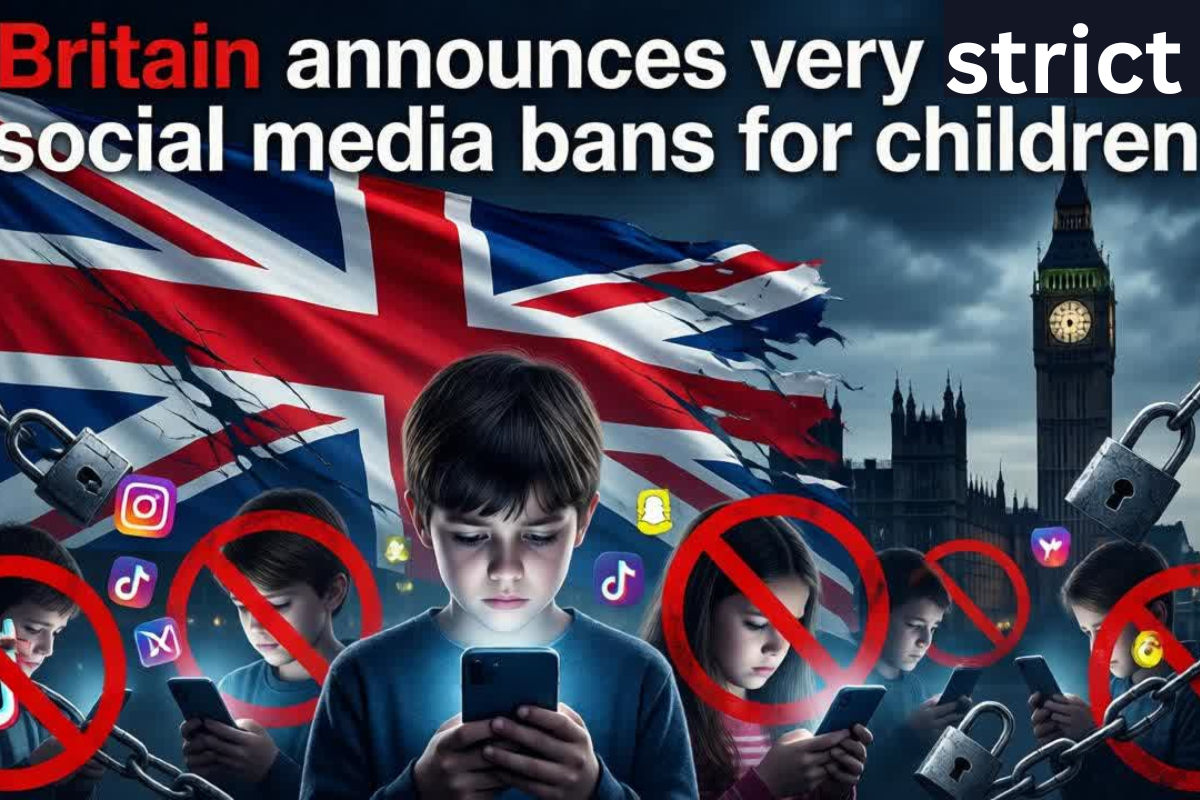
The UK will prohibit under-16s from using social media, according to British Prime Minister Keir Starmer’s announcement on Monday. He claimed that the proposed regulations will go “further than any country in the world” to safeguard children from online hazards.
The UK government said in a statement recently that “user-to-user platforms, whose purpose is to enable social interaction and which allow users to post material, alongside algorithms” will be impacted by the proposed social media ban.
This implies that Snapchat, TikTok, YouTube, Instagram, Facebook, and X will no longer be accessible to kids. The government added that messaging apps like Signal and WhatsApp won’t be impacted.
According to Starmer’s statement, “the changes will support parents grappling with the risks for children that come from the online world and help empower them by providing a clear decision on what is safe and age-appropriate for children.”
According to the announcement, the administration intends to present the measure to parliamentarians prior to Christmas, “with protections expected to come into force in Spring 2027.”
The UK is the most recent of several nations that have implemented or are contemplating prohibitions on children’s use of social media.
Malaysia began enforcing its own ban earlier this month, while Spain banned social media for those under the age of sixteen in February and imposed regulations mandating companies to use stringent age verification measures.
Additionally, initiatives to restrict children’s access to social media have been revealed by France, Denmark, and Norway.
Australia banned under-16s from using ten social media platforms in December, making it the first nation in the world to do so.
A poll by Australia’s eSafety commissioner reveals that many kids have managed to circumvent the prohibition, even though Spain’s ban was implemented too recently to yield any significant data on its efficacy.
Approximately seven out of ten children who had a social media account prior to the ban going into effect on December 10 still had one, according to a survey of 898 parents and caregivers of children ages 8 to 15 conducted between January 19 and February 2.
In a study released in March, Australia’s eSafety commissioner stated, “While there are fewer under-16s with social media accounts than there were four months ago, it is clear significant numbers of children aged under 16 are still on social media.”
It further stated that while Snapchat, TikTok, Facebook, Instagram, and YouTube are all presently being investigated, Australian authorities have not penalized any internet giants for failing to comply with the new legislation.
With “world-leading blocks on harmful functions such as livestreaming and stranger communication with children for under-16s,” which will also apply to other online services like gaming sites, the UK intends to go beyond Australia’s ban, according to the government.
“Taken together, these measures will mean a much more comprehensive model than just a blanket ban on social media—one that responds to how children experience harm online rather than just where it happens,” stated Starmer in the release.
According to the UK government, nine out of ten British parents support the ban, and children’s charities have also praised the action.
However, Barnardo’s CEO Lynn Perry cautioned that a prohibition “is not a silver bullet.”
The government and regulators must firmly hold social media companies accountable for ensuring the safety of their services. She added in a statement that it is not and has never been the responsibility of children to ensure their own safety.
In an effort to keep kids safe online, Meta, the parent company of Facebook and Instagram, has put in place mechanisms to restrict who may reach them and what they can see, a representative for the company told CNN.
However, the representative noted such bans won’t help keep kids safe.
“Bans risk isolating teens from online communities and information, as we’ve seen in Australia, and driving them to unregulated alternatives that lack built-in protections and parental controls,” they stated.
The Meta representative continued, “Any restrictions must be supported by an age verification system on devices so people aren’t asked to hand over ID to dozens of individual services to prove their age in order to be both effective and easy for parents.”